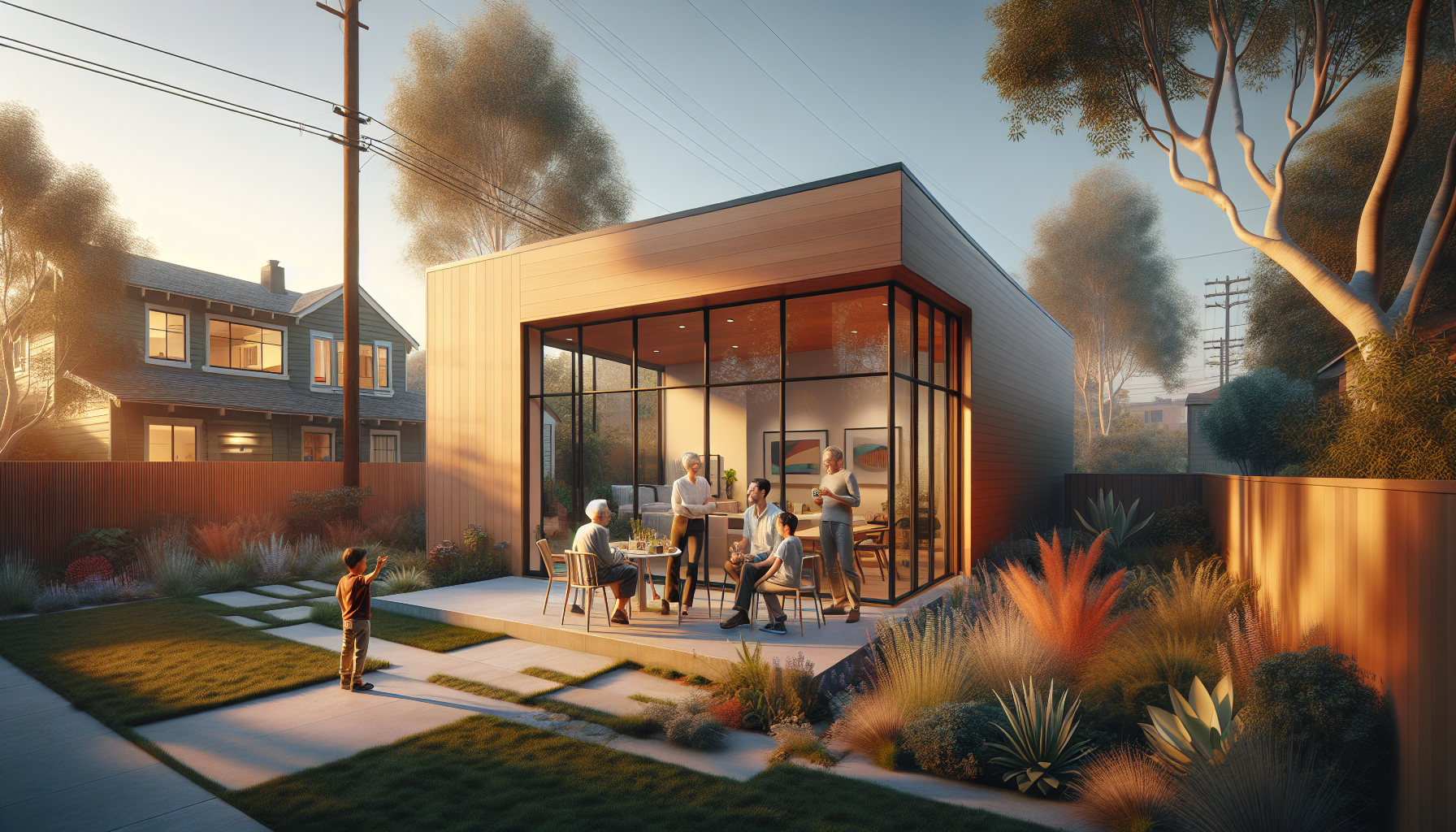
As parents grow older, families face one of the most important decisions they will ever make: how to keep aging loved ones close while preserving everyone's independence.
For many homeowners in Los Angeles and across Southern California considering senior housing options, an accessory dwelling unit (ADU) can be the ideal solution.
Sometimes called a granny flat, in-law suite, or backyard cottage, an ADU allows elderly parents to age in place just steps from family, without sacrificing privacy, dignity, or autonomy.
This guide covers everything you need to know about building an ADU for aging parents, from accessibility features and universal design principles to cost comparisons and family planning considerations.
At LADU, we help families design and build ADUs that are safe, comfortable, and thoughtfully planned for long-term living.
Our ADU Design Services team consists of professional ADU designers and architects with years of experience in the LA area. We'll examine your site in person, listen to your goals and preferences, and work with you to design the perfect ADU to meet your needs.
Schedule a free no-obligation site visit today, or call us at (213) 855-3334 to speak with an ADU expert.
ADUs Designed Better. Built Smarter.
Why Families Are Choosing ADUs for Aging Parents
The numbers tell a compelling story. An AARP survey found that 67% of adults would consider living in an ADU to be closer to loved ones, and the overwhelming majority of seniors say they want to age in place rather than move into institutional care.
An ADU makes multigenerational living possible while maintaining healthy boundaries.
Unlike a nursing home or assisted living facility, an ADU gives elderly parents their own kitchen, bathroom, and living area.
They manage their own household and daily routine while knowing that help is only steps away when they need it. This balance of independence and proximity is exactly what most families are looking for.
For homeowners, the benefits extend beyond caregiving. An ADU adds property value, creates potential rental income after the unit is no longer needed for family use, and offers a flexible housing solution that adapts over time.
Planning an ADU for Elderly Parents: Start Before You Need It
One of the most valuable lessons from families who have built ADUs for aging parents is this: do not wait until a health crisis forces the decision.
From initial ADU design services through ADU permitting and the full ADU construction process, the timeline typically runs nine months to a year before an aging parent can move in.
Families who start the planning process while their parents are still independent have time to make thoughtful decisions, involve all family members in the conversation, and handle the inevitable surprises that come with construction projects.
Those who wait until a parent has a fall or a sudden health decline often face rushed decisions and added stress.
Before breaking ground, discuss these key topics with your family:
- Lifestyle and independence: How much day-to-day support will your parents want or need? Will they cook for themselves or share meals with the main household?
- Privacy and proximity: Decide whether an attached or detached ADU is the better fit. A detached unit offers more separation, while an attached ADU with a breezeway allows easy access without going outside.
- Finances and estate planning: Who is funding the build? Consider consulting an estate planning attorney or elder law specialist to address questions about inheritance, asset protection, and Medicaid or Medi-Cal implications.
- Future care needs: Plan for what happens when care needs change. Could the unit later accommodate a live-in caregiver or transition into a rental?
Designing an ADU for Aging in Place
A well-designed ADU for seniors goes far beyond simply being accessible. The goal is to create a space that feels like home and is warm, inviting, and comfortable while incorporating universal design features that support safe living as mobility changes over time.
Single-Story, Open ADU Floor Plan
The foundation of any aging in place home design is a single-story layout with an open floor plan.
This eliminates stairs, reduces tight corners, and makes it easy to move with a walker or wheelchair if needed. Wide hallways and an open-concept living area also improve visibility and reduce the risk of falls.
Zero-Step Entries and Wider Doorways
Every entrance should have a zero-step or no-step entry so that aging parents can move in and out freely.
Interior doorways should be 32 to 36 inches wide to accommodate wheelchairs and walkers. Pocket doors are an excellent option in bathrooms and tight spaces because they eliminate the need to maneuver around a swinging door.
Bathroom Safety Features
The bathroom is where most falls occur, making it a priority for aging-in-place modifications. Essential features include:
- Walk-in or curbless showers with bench seating, handheld showerheads, and no tubs to step over.
- Grab bars near the toilet, inside the shower, and along walls.
- Comfort-height toilets that are easier on aging joints.
- Non-slip flooring throughout.
- Adequate lighting, including motion-sensor lighting for nighttime.
One important construction technique is installing blocking, which are reinforcement boards placed inside the walls during framing.
Blocking allows grab bars to be securely mounted at any time in the future. It costs very little during construction and eliminates the need for expensive wall modifications later.
Install blocking in bathrooms, hallways, all entrances, and near the kitchen, essentially anywhere someone might instinctively reach for support.
Kitchen and Living Modifications
Thoughtful kitchen design makes daily living easier for elderly parents.
Consider lower countertop sections for seated use, pull-out shelves and drawers instead of upper cabinets that require reaching, lever-style door handles and rocker light switches that are easier for arthritic hands, and accessible appliance placements such as wall ovens and drawer-style dishwashers.
Smart Home Technology
Smart home technology can significantly enhance safety and peace of mind.
Smart thermostats and voice-controlled lighting let seniors adjust their environment without getting up. Video doorbells and motion sensors can alert family members to activity or inactivity. Emergency alert systems provide an additional safety net.
ADA Compliance vs. Aging in Place Design
It's important to understand the difference between accessible design, aging in place features, and a fully ADA compliant home. Most private ADUs are not legally required to meet ADA standards, which apply primarily to public accommodations and certain multifamily housing.
However, California Residential Code Section R327 does require newly constructed homes to include specific aging-in-place features, such as at least one bedroom and bathroom on the entry level with 32-inch clear openings.
For families building an ADU for seniors, the best approach is to incorporate universal design principles that make the space safe and comfortable without making it feel clinical.
An ADA-compliant bathroom doesn't have to look like one; it can be beautiful and functional at the same time.
For those who need full wheelchair accessibility, additional considerations include a 60-inch turning radius in bathrooms and kitchens, accessible counters at 34-inch height, and all switches and controls placed between 15 and 48 inches above the floor.
ADU Cost vs. Nursing Home Costs: A Comparison
Cost is often a driving factor in the decision to build an ADU for aging parents. The average assisted living facility in California costs between $5,000 and $10,000 per month, while skilled nursing care can exceed $12,000 to $18,000 per month depending on the level of care required.
ADU construction cost typically ranges from $150,000 to $400,000+ in the Los Angeles area, depending on size, design complexity, and accessibility upgrades.
While this is a significant upfront investment, the math works out quickly. The cost of an ADU roughly equals two to four years of assisted living expenses, and unlike monthly facility payments, an ADU builds equity and adds lasting value to your property.
Beyond the financial calculation, an ADU keeps your family together. Parents maintain their independence, stay connected to their community, and receive support from family rather than rotating staff.
Studies consistently show that social connection and a sense of purpose are among the strongest predictors of healthy aging.
Multigenerational Living: More Than Just Housing
Building an ADU for elderly parents is as much about family planning as it is about construction. In fact, family dynamics often represent the majority of the decision; the structure itself is secondary.
Multigenerational living with an ADU creates opportunities for stronger bonds and daily connection.
Grandparents can be part of everyday family life, sharing meals and spending time with grandchildren, while still retreating to their own private space. This proximity provides emotional support that institutional care simply cannot replicate.
Some families find creative configurations. About a third of families have aging parents sell their home and move into a new ADU in their child's backyard.
Another third do the opposite: adult children build an ADU for themselves and let parents stay in the main house. The remaining families design their ADU as a flexible space that can serve different generations over time.
Browse popular ADU floor plans to find a layout that works for your family's needs.
Choosing the Right ADU: Attached, Detached, or Prefab
The choice between an attached ADU, detached ADU, or prefab ADU depends on your property, budget, and family preferences.
- An attached ADU connected by a breezeway gives aging parents easy access to the main house without going outside, which is ideal in rainy weather or for parents with limited mobility.
- A detached ADU in the backyard provides more privacy and separation.
- Prefab ADU options can offer faster construction timelines and predictable pricing, which may be especially appealing when time is a factor.
Your Next Step Toward Keeping Family Close
Building an ADU for aging parents is one of the most meaningful investments a family can make. It allows elderly parents to age in place with dignity, surrounded by the people who care about them most.
With careful planning, the right accessibility features, and a team that understands both the construction and the family dynamics involved, the process can be smooth and rewarding.
If you're starting to think about this decision, the time to begin planning is now. The construction timeline moves faster than most families expect, and early planning leads to better outcomes for everyone.
Schedule a free site visit with LADU to evaluate your property and discuss your options, or call us at (213) 855-3334 to start the conversation.
Contact us or schedule a free consultation to learn more about financing an ADU on your property.