Everything You Need To Know About AB 2533
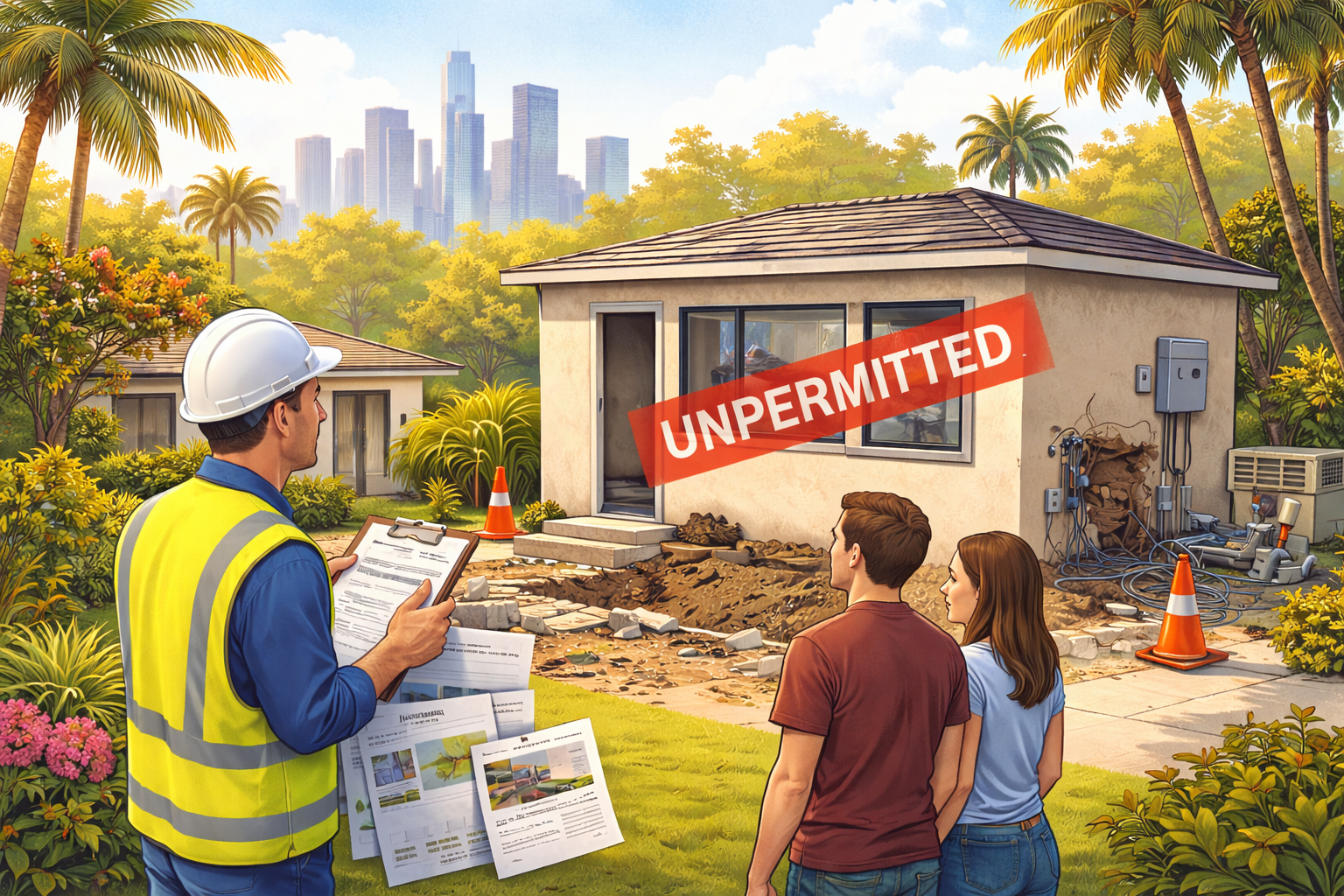
Los Angeles has tens of thousands of unpermitted accessory dwelling units. AB 2533 took effect January 1, 2025 and gives owners a penalty-free path to legalize an unpermitted accessory dwelling unit or junior accessory dwelling unit that was constructed before January 1, 2020.
The urgency is real. LA County has logged 296 code-enforcement violations tied to residential accessory structures since 2018, with 269 of those directly related to ADUs and just 27 involving solar installations.
The pace is accelerating: annual violations surged from 16 in 2018 to 53 in 2023, a 230% increase, and 92 cases remain under active investigation today, according to LA County public permitting records.
AB 2533 was designed to give homeowners a clear off-ramp before enforcement catches up to them.
This guide explains how AB 2533 and the related California ADU law work in practice, what a legal ADU requires under health and safety standards, and how LADU guides you through every permit step with fixed pricing and no surprises.
You'll learn:
- Who qualifies under AB 2533, what evidence is needed, and how ADUs, JADUs, and garage conversions fit under the ordinance.
- The Health and Safety Code framework, the § 17920.3 substandard building checklist, what it means to comply with health and safety, and how noncompliance of ADU laws in California is handled.
- Your options for a confidential third-party code inspection, a code inspection from a licensed professional, and an inspection from a licensed contractor.
- How the ADU permit process works in LA, what ADU building permits cover, common ADU permit fees, and when there are no retroactive impact fees or connection charges.
- How LADU provides an architect-led plan to correct noncompliance, align with building standards, and work with the city to approve necessary permits to correct hazards so your illegal ADU becomes a legal ADU.
- The year-by-year enforcement trend that motivated AB 2533 and why acting now, before the county's 92 open investigations expand, protects your property.
You will soon know exactly how to legalize your unpermitted ADU, navigate the AB 2533 checklist, pass city review, and protect your property value with a clear, step-by-step permit roadmap.
Schedule a free site visit with LADU today to understand your next steps and begin the legalization process.
One Team. One Contract. One Goal. ADUs Designed Better. Built Smarter.
What AB 2533 Means for an Unpermitted ADU in Los Angeles
AB 2533 simplifies and streamlines the process of legalizing an existing ADU that was built without proper permitting.
Legal status supports safer living conditions, insurance coverage, financing, and lawful rentals. A legal ADU can increase appraised value and help secure stable ADU rental income.
Why AB 2533 Was Needed: Enforcement Data Tells the Story
LA County homeowners have filed 18,848 ADU permits since 2018, a clear sign of massive adoption. But code enforcement has been ramping up alongside that growth.
County records show 296 total violations against residential accessory structures, 269 of which involved unpermitted ADUs. The year-by-year violation count illustrates the rising pressure that ultimately drove state lawmakers to pass AB 2533:
- 2018: 16 violations
- 2019: 32 violations
- 2020: 40 violations
- 2021: 43 violations
- 2022: 52 violations
- 2023: 53 violations
That's a 230% increase from 2018 to 2023. Of those 296 cases, 203 have been closed and 92 remain under active investigation. With 18,848 permits filed, enforcement clearly cannot keep pace with the scale of ADU adoption, but it's growing steadily.
AB 2533 offers homeowners a way to get ahead of that curve by legalizing proactively rather than waiting for a violation notice.
Eligibility Under AB 2533
AB 2533 applies to any unpermitted accessory dwelling unit or junior accessory dwelling unit that was constructed before January 1, 2020. That includes garage conversions, backyard cottages, and interior units that were added without permits.
An unpermitted accessory dwelling unit does not need to match every current ordinance or building standard to qualify. The focus is getting a safe, legal ADU in place for long-term use that complies with ADU California law.
Focus on Health and Safety
Local agencies use the Health and Safety Code § 17920.3 framework to determine whether a unit is substandard. The city evaluates items tied to habitability and life safety first, not full modern codes.
The checklist looks at basics such as safe wiring, adequate egress, smoke and carbon monoxide alarms, fire separation at shared walls, and proper ventilation. Fixes target noncompliance with health and safety conditions that present real risks.
Fees and Protections
AB 2533 offers fee relief and penalty protection for eligible units. Cities do not charge retroactive impact fees or connection charges unless new utility infrastructure is required for compliance.
Standard permit and inspection fees still apply under California ADU law. Owners with a Notice of Violation can still apply if the unit predates 2020, and the focus remains on safety corrections rather than punishment.
Local Implementation
In Los Angeles, LADBS must post the amnesty process online and accept applications that seek to legalize qualifying unpermitted units under Assembly Bill 2533. Applications are reviewed under California ADU laws with the health-first lens described above.
Step-by-Step: How Legalization Works Under AB 2533 and California ADU Law
The steps to permit an unpermitted ADU in Los Angeles are clear and simple to follow once you know the basics.
Step 1: Pre-Check With a Safety-Focused Inspection
Start with a third-party code inspection or a code inspection from a licensed professional. Many owners opt for an inspection from a licensed contractor who uses the § 17920.3 checklist to document hazards and confirm that the unit was constructed before January 1, 2020.
This early review helps you scope only the work needed to comply with health and safety standards.
Step 2: Apply to LADBS for an ADU Permit
Submit an application with forms, plans, and proof of the construction date, and then pay the applicable ADU permit fees. Evidence can include utility bills, tax records, dated photos, leases, or neighbor affidavits.
Step 3: City Inspection and Corrections Plan
LADBS will inspect the unit using the health and safety checklist. The city will review safety standards, provide recommendations tied to § 17920.3, and then approve necessary permits to correct specific hazards.
The goal is a focused correction plan, not a full rebuild to current building standards.
Step 4: Complete Only Required Safety Work and Finalize
Perform the repairs that address the items on the checklist, pull the necessary permits to correct noncompliance, and schedule final inspections.
The scope centers on items that correct noncompliance with health conditions, such as detectors, egress, ventilation, or basic wiring improvements. Once work is signed off, the unit becomes a legal ADU and can be insured and rented.
* This process aligns with Government Code section 66332 and AB 2533 protections, which prioritize health and safety outcomes for unpermitted accessory dwellings.
Common Fixes To Meet Health and Safety Standards for a Legal ADU
Life Safety Basics
Most projects focus on a short list of life safety items that deliver the greatest risk reduction:
- Smoke and carbon monoxide detectors in sleeping areas and common spaces.
- Emergency egress for sleeping rooms through doors or windows with clear openings.
- Fire separation at the garage or shared walls with rated assemblies where required.
- Safe heat sources, such as sealed combustion or electric systems installed to code.
These upgrades help the unit comply with health and safety standards without forcing a full-code renovation.
Structure and Utilities
Corrections often include electrical and mechanical fixes tied to habitability. Examples include:
- Replacing unsafe wiring.
- Adding GFCI outlets near sinks.
- Providing proper ventilation in kitchens and baths.
- Securing water heater strapping.
- Addressing moisture or structural issues that trigger the substandard definition under Health and Safety Code § 17920.3.
These focused repairs let owners legalize without unnecessary scope creep.
When LADBS Can Deny
LADBS can deny or pause approval if severe hazards exist. Examples include major structural failure, exposed live wiring, or blocked exits that show noncompliance with health and safety under § 17920.3.
County enforcement data underscores why these standards matter: of the 269 ADU-related violations on file, 92 remain under active investigation.
Properties flagged for serious hazards face longer timelines and higher correction costs. Addressing safety issues proactively through AB 2533, before a violation is filed, keeps the process faster and less expensive.
Once hazards are repaired under the permits issued, the application can move forward.
Costs, Timelines, and Proof for Unpermitted ADUs
ADU Permit Cost
Budget for standard ADU permit costs and inspection fees that cover plan review, field inspections, and record updates.
The exact ADU permit fees depend on scope, size, and number of inspections, similar to a typical ADU building permit path. LADU specializes in securing ADU building permits and will scope these fees early so owners can plan with confidence.
Fee Relief Under Assembly Bill 2533
Impact fees or connection charges are waived unless new utility infrastructure is required for compliance. This is a major savings point for garage conversions and many backyard ADUs that share existing services.
Proof of Pre-2020 ADU Construction
Gather evidence that shows the unit existed before the cutoff date. Strong documentation includes:
- Utility bills or meter history tied to the space.
- Property tax records and dated photos.
- Satellite images, leases, or neighbor affidavits.
LADU organizes this package so your application clears intake without delays.
Timelines
AB 2533 became effective on January 1, 2025. Once submitted, LADBS review follows standard timelines for ADU permits, with a focus on health and safety. Smooth reviews depend on complete plans, solid proof, and a clear correction scope.
In general, you can plan on a 3-month process to fully legalize an unpermitted ADU. With enforcement violations up 230% since 2018 and 92 investigations still open, the window to legalize without pressure from the county is narrowing.
Starting sooner gives you the advantage of a clean, voluntary application rather than a reactive one triggered by an enforcement notice.
How LADU Makes AB 2533 Simple: One Team. One Contract. One Goal.
Architect-Led Assessment
Our in-house architects start with a site visit and a focused review against the § 17920.3 checklist. We map required corrections, prepare drawings, and set a clear path to compliance. This helps you comply with health and safety without overspending on nonessential upgrades.
Fixed Pricing. No Surprises.
LADU offers flat-fee design packages, transparent ADU permits planning, and guaranteed construction pricing arranged through our licensed network. Owners can line up financing with confidence and avoid mid-project cost shocks.
Build Smarter
Design + Permitting + Build = LADU. We arrange ADU construction through licensed partners and manage submittals, inspections, and closeout to final approval. Our team coordinates with LADBS so you only complete the work required to legalize.
Free Site Visit
Get a free site visit, a feasibility report, financing options, and a step-by-step strategy tailored to your property.
Book a no-cost site visit to confirm eligibility, document proof, and set your action plan under AB 2533. Questions? Call (213) 855-3334 to speak with one of our ADU experts.
Design + Permitting + Build = LADU
Learn about LADU's new assistance program to legalize unpermitted ADUs across Los Angeles.
Key Takeaways
- AB 2533 and Government Code section 66332 create a clear path to a legal ADU or JADU for unpermitted units constructed before January 1, 2020.
- The focus is health and safety first, using the Health and Safety Code § 17920.3 checklist, not full building standards upgrades.
- Cities target hazards, not full rebuilds, and waive impact fees or connection charges unless new utility infrastructure is needed.
- ADU permit fees and inspection fees still apply under California ADU laws.
- Legalization supports property value, lawful rentals, insurance, and financing.
- A straightforward plan starts with a third-party code inspection or an inspection from a licensed contractor.
- LADBS will review safety standards and provide recommendations, then approve necessary permits to correct noncompliance.
- You complete the required work to comply with health and safety and receive final sign-offs for a legal ADU.
- Enforcement is not slowing down: 296 violations since 2018, a 230% year-over-year increase, and 92 cases still under investigation confirm that the county is actively pursuing unpermitted ADUs. Legalizing now through AB 2533 puts you ahead of that trend.
Frequently Asked Questions About AB2533 and ADU Permits
What if I have an NOV?
Many properties carry a Notice of Violation. If the unit was built before 2020, AB 2533 still applies. The city will focus on safety fixes, not fines or demolition, as long as hazards are addressed. County records show 203 violation cases have already been closed through corrections, demonstrating that the enforcement process is designed to resolve issues, not penalize homeowners who take action. With 92 investigations still open, resolving your NOV through AB 2533 now keeps you in the correction-focused track rather than risk escalation.
Do I need full code upgrades?
No. The goal is to correct noncompliance with health and safety items, not to rebuild to current codes. Full upgrades may be required only if serious hazards or new utility infrastructure trigger them.
Who can inspect my ADU?
You can start with a third-party code inspection or an inspection from a licensed contractor. This early step flags issues that violate California ADU laws and sets a realistic budget before you apply.
Is enforcement for unpermitted ADUs actually increasing?
Yes. LA County recorded just 16 ADU-related code-enforcement violations in 2018. By 2023 that number had risen to 53, a 230% increase. Of the 296 total violations on file, 92 remain under active investigation. With 18,848 ADU permits filed countywide, enforcement cannot keep pace with the scale of adoption, but it's growing every year. AB 2533 gives you a proactive path to legalize before a violation reaches your property.
Contact us or schedule a free consultation to learn more about financing an ADU on your property.