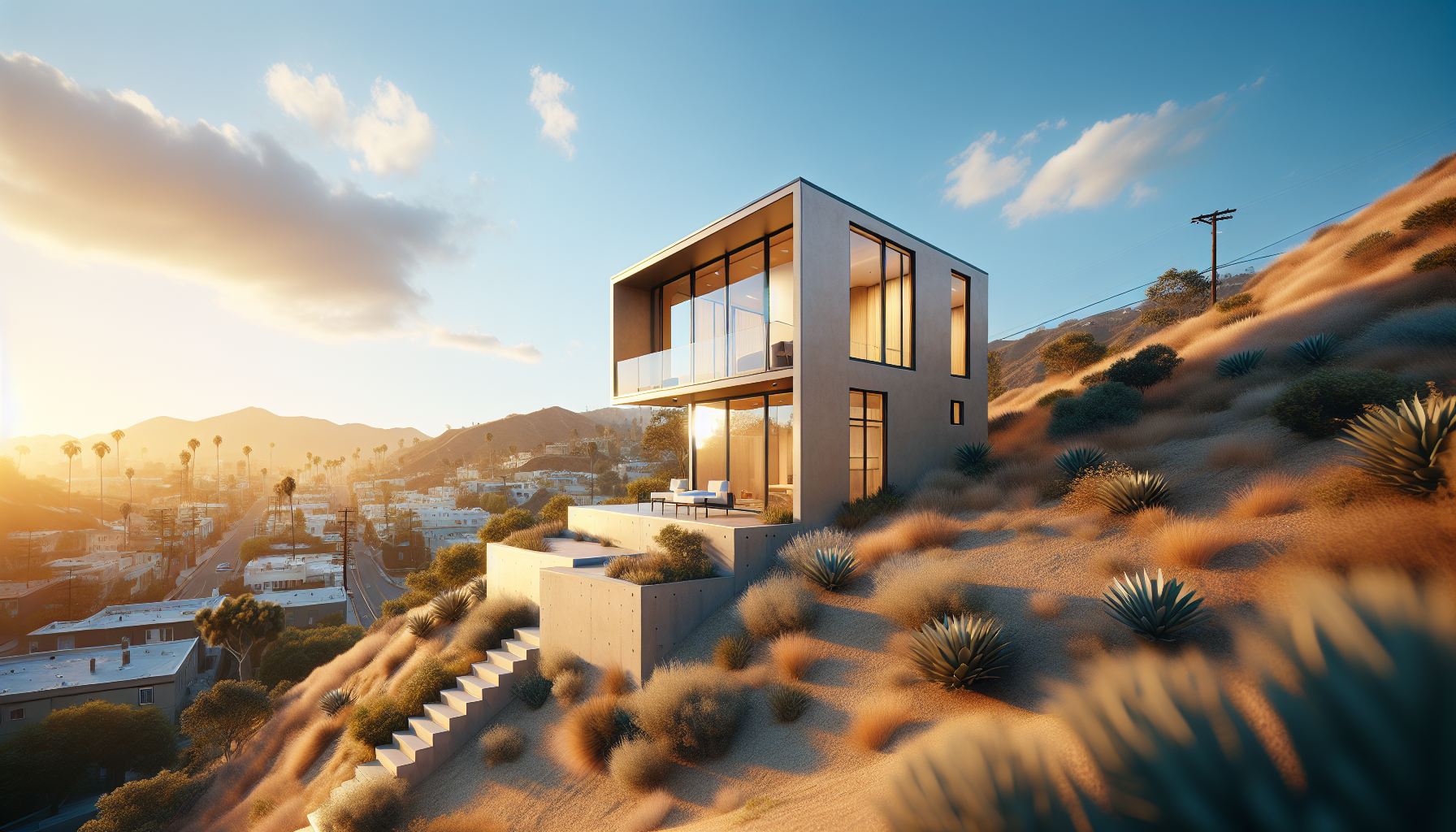
If you own a home in the hills above Los Angeles — Bel Air, Topanga, Altadena, Pacific Palisades, or any of the dozens of communities that sit inside a Very High Fire Hazard Severity Zone — you may have already been told that building an ADU isn't possible. For years, the City of Los Angeles prohibited ADUs in these zones outright unless owners first obtained a conditional use permit, a lengthy and expensive process most homeowners simply abandoned.
That changed on January 1, 2026. A new state law, AB 1154, prohibits cities and counties from using fire zone designations as a blanket justification to deny ADU permit applications. If your ADU meets fire-hardening standards, the city must approve it.
This is a significant shift for tens of thousands of Los Angeles property owners. Here's exactly what the new rules mean, what you'll need to build, and how to get started.
In this article, we'll cover:
- What fire hazard severity zones exist in Los Angeles and which neighborhoods are affected
- What the old rules were and why they blocked so many homeowners
- What AB 1154 changed and how it works in practice
- The fire-hardening requirements your ADU must meet
- How much extra fire-hardening adds to your project cost
- What to do next if your property is in a fire zone
What Is a Fire Hazard Severity Zone?
California's Office of the State Fire Marshal (OSFM) classifies land into three fire hazard severity designations based on vegetation, topography, weather patterns, and fire history:
- Moderate — Lower risk, typically flatland urban areas
- High — Elevated risk areas
- Very High Fire Hazard Severity Zone (VHFHSZ) — The highest-risk designation, found throughout the Santa Monica Mountains, hillside communities, and foothill areas
Within incorporated cities like Los Angeles, the city can also designate "Local Responsibility Areas" (LRA) with their own fire hazard maps, which often overlap with the state-designated zones.
For Los Angeles homeowners, the VHFHSZ designation applies to large swaths of residential property across neighborhoods including Pacific Palisades, Bel Air, Brentwood (hillside portions), Topanga, Malibu, Altadena, La Crescenta, Sunland-Tujunga, and portions of Silver Lake and Echo Park near the hills. In total, hundreds of thousands of parcels in Los Angeles County fall into this category.
To check whether your specific property is in a fire hazard zone, you can use the City of Los Angeles ZIMAS map or the Cal Fire zone lookup tool at osfm.fire.ca.gov.
The Old Rule: Blanket ADU Bans in Fire Zones
Before 2026, Los Angeles effectively barred ADUs in VHFHSZs in most cases. The city's municipal code prohibited ADUs in these areas unless:
- A Conditional Use Permit (CUP) was obtained, or
- The property had two distinct vehicular access routes to a public highway
The CUP requirement was a major barrier. Conditional use permits require public hearings, neighbor notifications, discretionary review by a city hearing officer, and processing times that typically stretch 6 to 18 months. The cost of the application and associated professional fees often ran $10,000 to $30,000 — before a shovel hit the ground, and with no guarantee of approval.
As a result, the vast majority of hillside homeowners simply couldn't pursue ADU projects. Many weren't even aware that their property was flagged; they'd submit a permit application, get a rejection letter citing "fire zone restrictions," and have no clear path forward.
What AB 1154 Changed
AB 1154, signed by Governor Newsom in October 2025 and effective January 1, 2026, directly targets this problem. The law prohibits local agencies — including the City and County of Los Angeles — from using fire zone designations as a standalone justification for denying an ADU permit application.
In plain terms: the city can no longer say "no ADUs here because it's a fire zone" and call it done. Instead, the city must:
- Apply standardized fire-hardening requirements to the ADU
- Approve the application if the proposed ADU meets those requirements
This flips the default from "denied unless you jump through special hoops" to "approved if you meet fire-safety standards." The Conditional Use Permit requirement for ADUs in VHFHSZs is no longer valid under state law.
This is the same approach the state took with AB 1154's JADU parity provisions — rather than allowing local governments to impose additional burdens, the law forces uniform treatment based on objective, measurable standards.
If your project is in the permitting phase and you'd like expert guidance, schedule a free consultation with LADU to understand exactly what requirements apply to your property.
Fire-Hardening Requirements: What Your ADU Must Meet
The trade-off for removing the blanket ban is that ADUs in fire hazard zones must meet California's fire-hardening construction standards. These are detailed in Chapter 7A of the California Building Code and the associated sections of the Los Angeles Municipal Code.
Here's what those requirements generally involve:
Exterior Walls and Siding
Materials must be ignition-resistant or noncombustible. This typically means fiber cement siding (like HardiePlank), stucco, or masonry. Standard wood lap siding and vinyl siding do not qualify.
Roofing
Class A fire-rated roofing is required. This includes concrete or clay tile, metal roofing, and certain composition shingles rated Class A. Wood shake roofs are not permitted.
Vents and Openings
All vents — soffit, eave, gable, and foundation — must be covered with 1/16-inch corrosion-resistant mesh or be specifically listed as ember-resistant. This is one of the most commonly overlooked requirements.
Windows and Glazing
Windows must be dual-pane with at least one pane of tempered glass. Single-pane windows are not permitted in VHFHSZ construction.
Decks and Exterior Wood Surfaces
Any attached deck, patio cover, or similar structure must use ignition-resistant materials. Pressure-treated lumber or composite decking rated for fire-hazard zones is acceptable; standard wood decking is not.
Defensible Space
California law requires 100 feet of defensible space around structures in VHFHSZs (or to the property line, whichever comes first). Zone 1 is the first 30 feet (lean, clean, and green), and Zone 2 covers 30 to 100 feet (reduced fuel). Your ADU will be subject to the same defensible space requirements as your main home.
Fire Sprinklers
An ADU in a VHFHSZ may be required to have a residential fire sprinkler system, particularly if the structure is more than 750 square feet or if the local fire department requires it based on access or water supply considerations. This is something your architect and contractor should verify early in the design process.
How Much Does Fire-Hardening Add to Your ADU Cost?
Fire-hardening is real additional cost, but it's more manageable than most homeowners expect. As a rule of thumb, budget 15–25% more than the base cost of a comparable ADU built outside a fire zone. Here's where that money goes:
| Item | Standard ADU | VHFHSZ ADU |
|---|---|---|
| Siding | Wood or vinyl | Fiber cement or stucco |
| Roofing | Standard composition shingle | Class A tile or metal |
| Windows | Single-pane or standard dual-pane | Tempered dual-pane |
| Vents | Standard | Ember-resistant |
| Decking (if any) | Pressure-treated wood | Ignition-resistant composite |
| Sprinklers | Often not required | May be required |
For context, a typical 600 sq ft detached ADU in Los Angeles costs in the range of $200,000–$350,000 all-in. Fire-hardening might add $30,000–$60,000 to that figure, depending on the specific materials chosen and the scope of the project. That's real money — but compared to the cost of the home itself, and the rental income the ADU will generate, most hillside homeowners find it worthwhile.
For a detailed breakdown of what ADUs cost in Los Angeles, see our guide to ADU costs in Los Angeles.
Can You Build an ADU on a Hillside Lot?
Fire zone designation is one challenge for hillside properties; slope and access are two others. Here's a quick rundown:
Slope: Los Angeles allows ADUs on sloped lots, but significant grading may be required. On lots steeper than 15%, you may need a soils report and a grading plan stamped by a licensed civil engineer. Hillside foundation types — caissons, helical piers, or stepped footings — cost more than a standard slab.
Access: Pre-2026, the "two vehicular access routes" requirement blocked many hillside ADUs. While AB 1154 removes the blanket ban, LAFD may still evaluate access during plan check for fire safety purposes. If your property has a single-lane driveway, discuss this with your contractor early.
Setbacks: Standard ADU setback rules (4 feet from rear and side property lines for detached ADUs) apply in fire zones. Some hillside overlay zones have additional setback requirements — verify with a professional before designing your unit.
LADU builds ADUs throughout the Los Angeles hillside communities. Our in-house permitting team knows these zones well and can identify potential site-specific issues before they become costly surprises. Get a free consultation to discuss your specific property.
AB 462 and Fire Disaster Recovery: A Related Provision
If your primary home was damaged or destroyed in a state-declared disaster — such as the 2025 Palisades or Eaton fires — a separate law, AB 462, may apply to your situation.
AB 462, also effective in 2026, allows a detached ADU to receive a Certificate of Occupancy before the primary dwelling is rebuilt, provided:
- The Governor declared a state of emergency for your county on or after February 1, 2025
- Your primary home was substantially damaged or destroyed
- The ADU has passed all required inspections
This means fire-impacted homeowners can move back onto their property — in a newly built ADU — while the main house reconstruction is still underway. For many families, this dramatically changes the calculus of rebuilding after a disaster.
If you're in this situation, get in touch with LADU — we help homeowners navigate post-fire rebuilds, AB 462, and ADU permitting together.
How the Permitting Process Works Now
With the blanket ban gone, the ADU permitting process for fire zone properties follows the same basic path as any other Los Angeles ADU — with a few extra review steps:
- Pre-application / site review — Verify fire zone designation, assess lot constraints, confirm access requirements with LAFD
- Design and plans — Architect prepares construction documents incorporating Chapter 7A fire-hardening specs
- Plan check submission — Submitted to LADBS; fire zone properties get a concurrent review by LAFD
- Permit issuance — Under SB 543 (also effective 2026), LADBS must determine whether your application is complete within 15 business days; the overall approval clock is 60 days
- Construction — Build to fire-hardening specs; inspections include fire-specific sign-offs
- Certificate of Occupancy — Issued once all inspections pass
The permitting timeline for hillside ADUs is typically 4–8 months for plan check, depending on project complexity. Construction adds another 6–12 months. Working with a team that has done this before is the most reliable way to avoid delays.
For a full breakdown of what permits cost in Los Angeles, see our ADU permit cost guide.
What About Financing an ADU in a Fire Zone?
Financing a fire zone ADU works the same way as any other ADU project. Your main options include:
- Cash-out refinance — Tapping home equity through a new first mortgage
- Home equity line of credit (HELOC) — Flexible draw-down against existing equity
- ADU-specific construction loans — Several lenders now offer products purpose-built for ADU projects
- CalHFA ADU Grant — Up to $40,000 in predevelopment cost reimbursement for qualifying homeowners (income limits apply)
One note: some lenders and insurers have become more cautious about properties in high fire risk areas following the 2025 LA wildfires. It's worth speaking to multiple lenders and confirming your homeowner's insurance situation before committing to a project.
See our ADU financing guide for a full comparison of options.
LADU Builds in Fire Hazard Zones
LADU is a full-service ADU design and construction company based in Los Angeles. We handle everything — design, permitting, construction, and project management — under one roof and at a fixed price.
Our team has direct experience navigating fire zone requirements across Los Angeles hillside communities. We know which fire departments require early coordination, how to design efficient ADUs that meet Chapter 7A standards without excessive cost, and how to move through LAFD plan check without delays.
If you own a hillside property and have been told an ADU isn't possible, it's worth having an updated conversation. The rules have changed materially as of 2026.
Schedule a free consultation with LADU and we'll assess your specific property, walk you through what's now possible, and give you a clear picture of what a project would look like.
Summary
For years, Los Angeles homeowners in fire hazard zones were effectively locked out of ADU development. A blanket prohibition — combined with the cost and uncertainty of conditional use permits — made projects infeasible for most.
AB 1154, effective January 1, 2026, changes that. Cities can no longer use fire zone designations as a standalone reason to deny an ADU. As long as your project meets California's fire-hardening construction standards, the permit must be approved.
The practical implications:
- Hillside homeowners in VHFHSZs across LA now have a real path to build
- Fire-hardening adds cost — roughly 15–25% more than a standard ADU — but doesn't make projects unviable
- The permitting process now follows the same general timeline as any LA ADU, with added LAFD review
- AB 462 offers additional relief for homeowners rebuilding after fire damage
If your property is in a fire zone and you've been waiting for clarity, 2026 is the year to move forward.
Talk to LADU's team — we'll help you figure out what's possible on your specific lot.
Contact us or schedule a free consultation, and we'll help guide you through the permitting process to ensure your ADU meets all the necessary legal requirements.